

beneficial.antelope.whlz
About Company
Why a Bouncing Watermelon Stole My Whole Evening
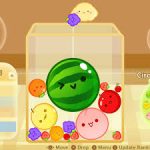
It started innocently enough. A friend sent me a link, I clicked, and the next thing I knew, an hour had passed while I stared at two oranges that refused to merge. If you’ve seen clips of a giant watermelon bouncing around a little wooden box, you already know the game I’m talking about. Suika Game — “suika” means watermelon in Japanese — is the deceptively simple puzzle that has quietly swallowed countless free evenings since it went viral.
On the surface, it looks almost too easy to be fun. Fruit falls from the top of a small container. Drop two of the same kind together and they combine into a bigger fruit. That’s… it. And yet, ask anyone who has played, and they’ll tell you the same thing: “Just one more round.” It’s free to play in a browser, works on basically any device, and takes about ten seconds to learn. Ten seconds to learn, a lifetime to master — or at least, a very long lunch break. People share their high scores like battle scars, and there’s a reason the game took over social media: it’s equally fun to play badly.
Here’s how to play, how to think, and how to survive the inevitable moment when everything goes wrong.
How to Play
The rules fit in one sentence: fruit drops, matching fruit merges, bigger fruit is better. There are eleven stages of fruit, starting with tiny cherries and grapes and moving up through lemons, oranges, apples, pears, peaches, pineapples, melons, and finally the glorious watermelon. When two fruits of the same size touch, they combine into the next size up. Two cherries become a grape, two grapes become a lemon, and so on.
One thing worth knowing: the fruit sizes don’t scale evenly. A melon looks almost identical to a watermelon at a glance, and the two don’t merge — only exact matches do. New players lose runs to that confusion all the time, so look carefully before you commit.
You control where the fruit lands by moving left and right, and you can speed up the drop whenever you like. That’s the entire control scheme. No timers, no move limits, no power-ups — just you, a box, and an endless supply of fruit. Every merge earns points, with bigger fruits worth more, but honestly, most of us aren’t playing for the leaderboard. We’re playing for the little thrill when two pineapples finally click together.
The catch is the box. It has a line near the top, and once fruit piles up above it, the game is over. The fruit keeps coming whether you’re ready or not, so the real challenge is spatial reasoning under pressure. Can you fit a pear into that tiny gap? Should you risk dropping a big fruit now, or wait? The game never tells you what’s coming next, which is exactly why it’s so addictive. That first moment when you realize you’ve trapped a big fruit you desperately needed — it’s a rite of passage.
Tips From Someone Who Has Lost a Lot
After many, many rounds, here are the lessons I wish I’d known from the start.
Keep the surface flat. It’s tempting to just drop fruit anywhere, but a flat top layer makes it far easier to guide new fruit where you want it. Gaps and slopes create chaos — fruit rolls, bumps, and lands where you least expect it. Think of the box as a shelf you’re slowly filling, and try to keep it level as you go.
Build in pairs. The smartest players keep two of the same fruit on hand, so every new drop has a partner ready to merge. That’s what creates satisfying chain reactions — two grapes become a lemon, two lemons become an orange — and chain reactions are where the magic happens. A well-timed cascade that clears half the board is one of the most satisfying feelings in gaming.
Don’t neglect the edges. The walls of the box are your friends. A fruit resting against the side stays put instead of rolling around, which makes the corners perfect staging areas for your next merge. On the flip side, a gap in the corner can silently swallow small fruits forever — check your corners before you drop.
Accept the chaos. No matter how carefully you plan, eventually a strawberry will land somewhere terrible, or you’ll get five pears in a row with nowhere to go. When that happens, don’t panic. Slow down, look at the whole board, and find the merge that buys you the most room. Panic drops end runs; calm ones extend them.
The watermelon is a bonus, not the goal. Chasing the giant fruit is fun, but the real win is keeping the box tidy and building smart chains. The watermelon will come when it comes — and when it does, celebrate. You’ve earned it.
Final Thoughts
What makes Suika Game special isn’t flashy graphics or complex mechanics. It’s the way it turns a simple idea — fruit merges with fruit — into a genuinely thoughtful little puzzle. It rewards planning, punishes greed, and always leaves you feeling like one more round will fix everything. Sometimes it does. Usually, it just makes you laugh at your own optimism.
Whether you play for two minutes on a coffee break or two hours past midnight, it’s the kind of game that fits into any life. No downloads, no skill gate, no pressure — just fruit, physics, and the quiet thrill of watching a tiny cherry become a giant watermelon. Bring your patience, keep your corners tidy, and remember that the fruit is falling for everyone. Even the best players lose to a rogue lemon now and then.
Give it a try, and maybe keep the volume down if it’s late. You’ll be the one yelling at fruit soon enough.
